

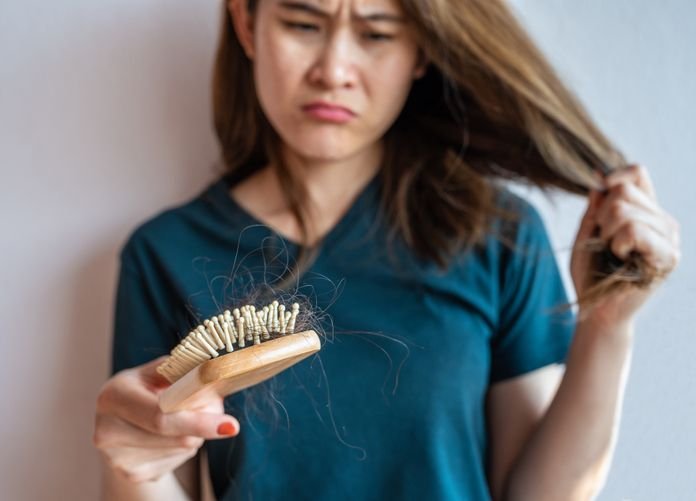
Noticing more hair on your pillow, brush, or shower drain can be worrying. Some daily shedding is completely normal; the American Academy of Dermatology notes that people typically lose around 50 to 100 hairs per day as part of the natural hair cycle. However, noticeable thinning, bald patches, or a sudden increase in shedding may have an underlying cause. If you’re wondering How to Stop Hair Fall Naturally, start by looking at your overall hair-care routine, diet, stress levels, and recent health changes. Gentle care and good nutrition can support healthy hair, but natural methods cannot treat every type of hair loss.
In particular, hereditary hair loss, hormonal changes, thyroid conditions, nutritional deficiencies, scalp disorders, and certain medications may require professional evaluation. Therefore, identifying the cause should come before relying on home remedies.
What Causes Hair Fall?
Hair fall can happen for many different reasons. In some cases, shedding is temporary and improves once the trigger disappears. Other forms of hair loss can continue without appropriate treatment.
Common causes include:
- Hereditary hair loss
- Stress
- Rapid weight loss
- Nutritional deficiencies
- Iron deficiency
- Hormonal changes
- Thyroid problems
- Certain medications
- Illness or high fever
- Tight hairstyles
- Excessive chemical treatments
- Scalp conditions
- Some autoimmune conditions
For example, significant stress or illness can sometimes lead to increased shedding several weeks or months later. Similarly, inadequate intake of nutrients such as iron or protein can contribute to hair loss in some people.
Is Daily Hair Shedding Normal?
Yes, some shedding is expected.
Hair naturally moves through different growth and resting phases. As older hairs fall out, new hairs can grow from the follicles.
Nevertheless, noticeable changes deserve attention. A widening part, thinner ponytail, receding hairline, or bald patch can indicate actual hair loss rather than ordinary shedding.
How to Stop Hair Fall Naturally With a Healthy Diet
Nutrition plays an important role in maintaining normal hair growth. Your body needs adequate calories, protein, iron, zinc, and other nutrients to support healthy hair production.
Instead of following restrictive diets, focus on balanced meals containing a variety of whole foods.
Eat Enough Protein
Hair is largely made from a protein called keratin. Therefore, consistently eating enough protein is important for overall hair health.
Good choices include:
- Eggs
- Fish
- Chicken
- Yogurt
- Milk
- Lentils
- Beans
- Chickpeas
- Nuts and seeds
- Tofu
Vegetarian and plant-based diets can also provide sufficient protein when meals are planned carefully.
Include Iron-Rich Foods
Low iron levels can be associated with hair loss in some people. Foods such as lentils, beans, leafy greens, meat, and fortified cereals can contribute to your daily iron intake.
However, do not start high-dose iron supplements without professional advice. A healthcare provider can determine whether a deficiency exists and whether supplementation is appropriate.
Avoid Extreme Dieting
Severely restricting calories can trigger significant hair shedding.
If you are trying to lose weight, choose a gradual and balanced approach instead. Your hair needs adequate energy and nutrients to maintain its normal growth cycle.
How to Stop Hair Fall Naturally With Gentle Hair Care
Your everyday hair-care habits can influence breakage and the overall condition of your strands.
Choose a Gentle Shampoo
A gentle shampoo can cleanse the scalp without unnecessarily drying the hair.
Focus the shampoo mainly on your scalp. As you rinse, the lather can naturally move through the lengths.
If your scalp becomes oily quickly, you may need more frequent washing. Conversely, a dry or sensitive scalp may feel better with a milder routine.
Condition After Every Wash
Conditioner helps coat the hair shaft and improve manageability. As a result, it can reduce friction and make detangling easier.
Apply conditioner mainly to the lengths and ends. For additional moisture, consider using a leave-in conditioner if your hair is dry or prone to tangling.
The American Academy of Dermatology recommends gentle washing, moisturizing conditioner, and careful handling for people experiencing hair loss or thinning.
Avoid Aggressive Brushing
Pulling forcefully through knots can cause unnecessary breakage.
Instead, start at the ends and gradually work upward. A wide-tooth comb can also make detangling easier, particularly when hair is wet.
Remember that reducing breakage will not necessarily treat hair loss from the follicle. Still, gentle handling helps protect the hair you already have.
Avoid Hairstyles That Pull on Your Hair
Tight ponytails, buns, braids, and extensions can place repeated tension on the scalp.
Over time, constant pulling may cause traction alopecia. In some cases, prolonged tension can lead to permanent hair loss.
Therefore, choose looser hairstyles whenever possible. You can also vary where you secure your ponytail or bun to avoid repeatedly stressing the same area.
If a hairstyle causes scalp pain or tenderness, loosen it immediately.
Reduce Heat and Chemical Damage
Heat styling does not directly cause every type of hair loss, but excessive heat can weaken the hair shaft and increase breakage.
Try to limit:
- Flat irons
- Curling irons
- Hot brushes
- High-heat blow-drying
- Frequent bleaching
- Chemical straightening
- Repeated relaxing
When heat styling is necessary, use a heat protectant and select a lower effective temperature.
Moreover, avoid overlapping multiple chemical services. Giving your hair time between treatments can help reduce unnecessary stress.
Manage Stress for Better Hair Health
Stress can affect the hair-growth cycle. Significant physical or emotional stress may contribute to temporary increased shedding in some people.
Although eliminating stress completely is unrealistic, healthy coping habits may support your overall well-being.
Try incorporating:
- Regular walks
- Gentle exercise
- Consistent sleep
- Relaxation exercises
- Time outdoors
- Breathing exercises
- Social connection
- Screen-free breaks
Most importantly, do not blame yourself for stress-related shedding. Hair loss can have multiple causes, and identifying the actual trigger is more useful than focusing on one lifestyle factor.
Take Care of Your Scalp
A healthy scalp provides the environment where hair follicles grow.
Keep your scalp clean without excessive scrubbing. Furthermore, pay attention to persistent itching, redness, scaling, pain, or inflammation.
Dandruff and other scalp conditions can require specific treatment. If symptoms continue despite basic care, consult a dermatologist rather than repeatedly changing hair products.
Does Scalp Massage Help Hair Growth?
Scalp massage is relaxing and may temporarily improve the feeling of scalp circulation. However, evidence is not strong enough to consider massage a proven treatment for every type of hair loss.
You can gently massage your scalp while shampooing, but avoid scratching or applying excessive pressure.
Be Careful With Hair Growth Supplements
Hair vitamins are heavily marketed online. Nevertheless, supplements are not a universal solution for hair fall.
The American Academy of Dermatology warns that excessive amounts of certain nutrients, including selenium and vitamins A and E, can actually worsen hair loss.
Consequently, it is better to identify a nutritional deficiency before taking high-dose supplements.
A blood test may help a healthcare professional determine whether you are lacking certain nutrients.
Protect Your Hair While Sleeping
Nighttime friction can contribute to tangling and breakage.
Consider using:
- A satin pillowcase
- A silk pillowcase
- A loose braid
- A soft scrunchie
- A relaxed protective hairstyle
Avoid sleeping with very tight hairstyles. In addition, do not tie wet hair tightly because wet strands can be more vulnerable to stretching and breakage.
Stay Hydrated and Maintain Healthy Habits
Drinking enough fluids supports your overall health, although simply drinking more water is not a proven cure for hair loss.
Instead, focus on your complete lifestyle.
A balanced routine should include:
- Nutritious meals
- Adequate sleep
- Regular physical activity
- Stress management
- Gentle hair care
- Appropriate scalp care
Together, these habits can support general well-being and healthy-looking hair.
How to Stop Hair Fall Naturally: A Simple Weekly Routine
A consistent routine is easier to maintain than a complicated one.
Morning Hair Care
Start your day with gentle styling. Avoid pulling the hair tightly and use a lightweight serum or leave-in conditioner if your lengths are dry.
If you spend considerable time outdoors, a hat can provide additional protection from environmental exposure.
Wash-Day Routine
Begin with a gentle shampoo and follow with conditioner. Then, detangle carefully and avoid aggressive towel rubbing.
If you use a hair dryer, choose a lower heat setting. A heat protectant can provide an additional layer of protection.
Nighttime Routine
Before bed, gently detangle your hair if necessary. Then secure it loosely or leave it down if that feels more comfortable.
A smooth pillowcase can also help reduce friction.
Natural Remedies for Hair Fall: What Actually Helps?
Many home remedies are promoted as natural hair-growth solutions. However, evidence varies considerably.
Coconut Oil
Coconut oil can help condition hair and may reduce protein loss from the hair shaft. Therefore, it can be useful for improving the feel and manageability of dry hair.
However, coconut oil should not be presented as a proven cure for follicle-related hair loss.
Aloe Vera
Aloe vera is commonly included in scalp and hair products because of its soothing, lightweight feel.
Still, there is insufficient evidence to say that aloe vera alone can stop significant hair loss.
Rosemary Oil
Rosemary oil is frequently discussed as a natural hair-growth ingredient. Some research has explored its potential, but evidence remains limited compared with established medical treatments.
If you choose to use an essential oil, dilute it appropriately and stop if irritation occurs.
Onion Juice
Onion juice is a popular home remedy, particularly online. However, it can irritate the scalp, and evidence is limited.
For persistent hair loss, relying on home remedies alone may delay diagnosis of an underlying condition.
When Should You See a Dermatologist?
Natural hair care can support your strands, but persistent hair loss deserves professional attention.
See a dermatologist or healthcare professional if you notice:
- Sudden heavy shedding
- Bald patches
- A rapidly widening part
- A receding hairline
- Persistent scalp itching
- Scalp pain or tenderness
- Redness or scaling
- Noticeable thinning
- Hair loss that continues for several months
The American Academy of Dermatology emphasizes that hair loss has many causes and that finding the underlying cause is important for effective treatment.
Similarly, the NHS advises seeking medical advice if you are concerned about hair loss rather than relying solely on commercial hair clinics or self-treatment.
Frequently Asked Questions
How can I stop hair fall naturally at home?
Start with gentle hair care, balanced nutrition, adequate protein and iron intake, reduced heat styling, looser hairstyles, and good stress-management habits. However, these steps cannot treat every cause of hair loss.
Can diet really help reduce hair fall?
Yes, adequate nutrition supports normal hair growth. In particular, insufficient protein or certain nutrients can contribute to hair loss. However, supplements should only be used when appropriate and preferably after professional evaluation.
How much hair fall is normal each day?
The American Academy of Dermatology states that losing around 50 to 100 hairs per day can be normal. A sudden increase in shedding or visible thinning, however, may indicate a hair-loss condition.
Is coconut oil good for hair fall?
Coconut oil can help condition the hair shaft and reduce protein loss. Nevertheless, it is not a proven treatment for every cause of hair loss.
Does scalp massage stop hair loss?
Gentle scalp massage can be relaxing, but evidence is not strong enough to consider it a reliable treatment for significant hair loss. Persistent shedding should be evaluated to determine its cause.
Can stress cause hair fall?
Yes. Significant physical or emotional stress can sometimes trigger temporary increased shedding. Once the underlying trigger improves, hair may gradually return to its normal growth cycle.
Should I take biotin for hair fall?
Not automatically. Biotin deficiency is uncommon, and taking supplements without a deficiency may not improve hair growth. Moreover, excessive intake of certain supplements can be harmful. Speak with a healthcare professional before starting a high-dose hair supplement.
Can tight hairstyles cause hair loss?
Yes. Repeated tension from tight ponytails, buns, braids, or extensions can contribute to traction alopecia. Therefore, choosing looser hairstyles can help reduce unnecessary stress on the follicles.
When should I see a doctor for hair fall?
Seek medical advice if hair loss is sudden, severe, persistent, or accompanied by scalp symptoms. A dermatologist can help identify the underlying cause and recommend appropriate treatment. The American Academy of Dermatology Hair Loss Resource Center is also a useful evidence-based resource.
Can natural remedies regrow lost hair?
Natural remedies may improve hair conditioning or reduce breakage, but they cannot reliably regrow hair when the underlying cause requires medical treatment. The right approach depends on why the hair is falling out.
Final Thoughts
Learning How to Stop Hair Fall Naturally starts with understanding that hair loss is not caused by one factor in every person. Nutrition, stress, genetics, hormones, illness, medications, scalp health, and hair-care practices can all play different roles.
Therefore, begin with simple habits: eat a balanced diet, handle your hair gently, reduce excessive heat, avoid tight hairstyles, and care for your scalp.
At the same time, do not ignore persistent or sudden hair loss. Finding the cause early can make treatment more effective for some conditions.
Build a Healthier Hair Routine With SkinWiseDaily
Want more practical hair and beauty advice? Visit SkinWiseDaily for original skincare guides, hair-care routines, ingredient explainers, and beauty tips.
You can also explore related topics such as Best Hair Growth Serum in 2026, Best Essential Hair Care Tips to Restore Damaged Hair, and How to Use L’Oréal Hair Serum to create a complete hair-care routine.
Start with simple, evidence-informed habits and give your hair time to respond.
Leave a Reply
You must be logged in to post a comment.